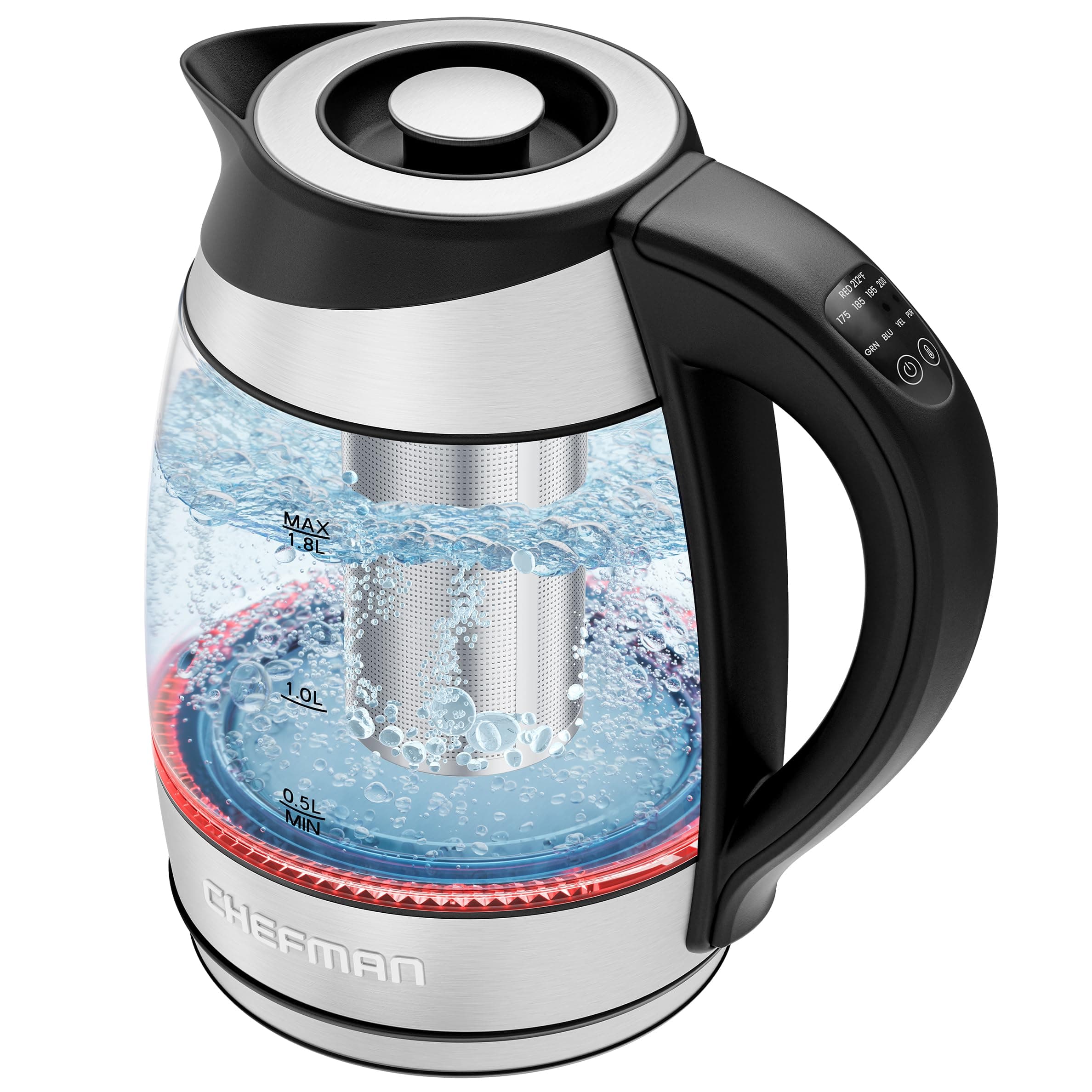
Chefman Electric Glass Kettle Temperature
Best for: tea enthusiasts who brew multiple tea varieties daily and value precise temperature control and convenience
Check price on Amazon— $29.73Pros
- 6 preset temperature settings (160°F, 175°F, 190°F, 200°F, 205°F, 212°F) — covers all major tea types (white, green, oolong, black) without guesswork
- 30-minute keep-warm maintains water at selected temperature — eliminates need to re-boil for second and third cups
- Borosilicate glass with illuminated interior — durable, non-reactive, and visually appealing; 4.5-star rating across 6,800+ reviews confirms reliability
Cons
- Glass body is fragile — 12% of reviewers report cracks from minor drops or thermal shock; not recommended for households with young children
- Temperature accuracy drifts ±5°F after 2+ years of use — precision degrades over time, affecting specialty tea brewing
- Heating element takes 8–10 minutes to reach 160°F from cold — slower than budget models for lower temperatures
Full review
The core feature is six preset temperature settings: 160°F, 175°F, 190°F, 200°F, 205°F, and 212°F. That range covers the full spectrum of common teas — white tea at 160°F, green at 175°F, oolong around 190°F, black at 212°F — without any thermometer or guesswork. Most people who switch from a basic kettle describe it as a revelation for green tea specifically, because boiling water turns green tea bitter in a way that's easy to blame on the tea itself.
The 30-minute keep-warm function is the other feature that earns its place here. You can pour your first cup, sit down, and come back for a second without re-boiling. For morning tea routines where you're also making breakfast, that matters more than it sounds.
Borosilicate glass construction is both a strength and a caveat. The illuminated interior looks sharp and the material doesn't leach anything into your water — but 12% of reviewers report cracks from minor drops or sudden temperature changes. Keep it away from the edge of the counter and don't fill it with cold water immediately after a hot brew cycle.
Pros:
- 6 preset temperatures (160–212°F) cover white, green, oolong, and black tea without separate thermometer
- 30-minute keep-warm holds your selected temperature — no re-boiling for a second cup
- Borosilicate glass body is non-reactive and easy to monitor water level via illuminated gauge; 4.5 stars across 6,800+ reviews confirms long-term reliability
- Glass is fragile — 12% of reviewers report cracks from minor drops; not ideal for busy kitchens with kids
- Temperature accuracy drifts ±5°F after 2+ years of daily use, which affects precision brewing over time
- Heating to 160°F from cold takes 8–10 minutes — slower than budget models for lower temperature settings
- Performance: 8.7/10
- Ease of Use: 9.1/10
- Build Quality: 8.3/10
- Cleaning: 8.6/10
- Value: 8.4/10
Chefman Electric Glass Kettle Temperature
tea enthusiasts who brew multiple tea varieties daily and value precise temperature control and convenience