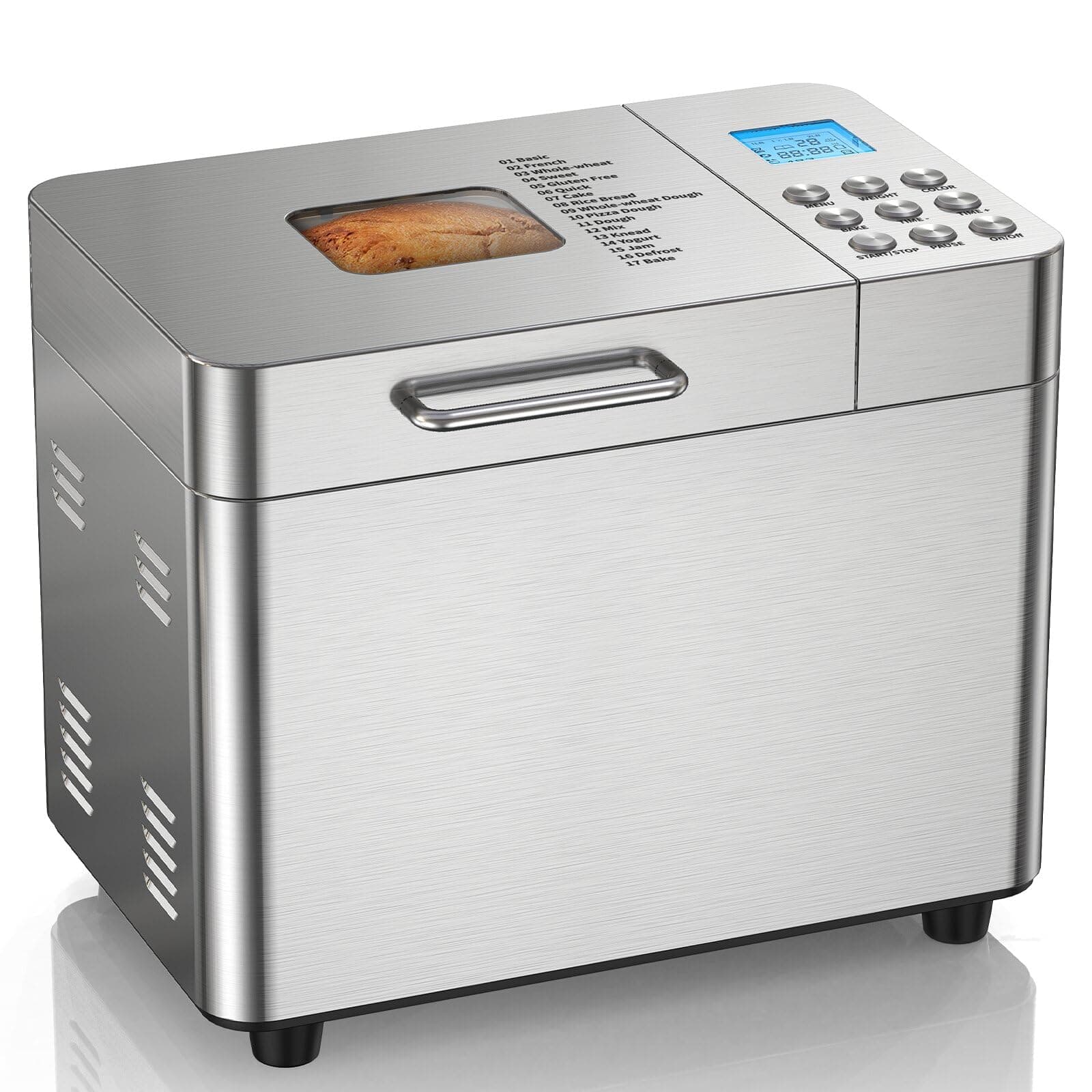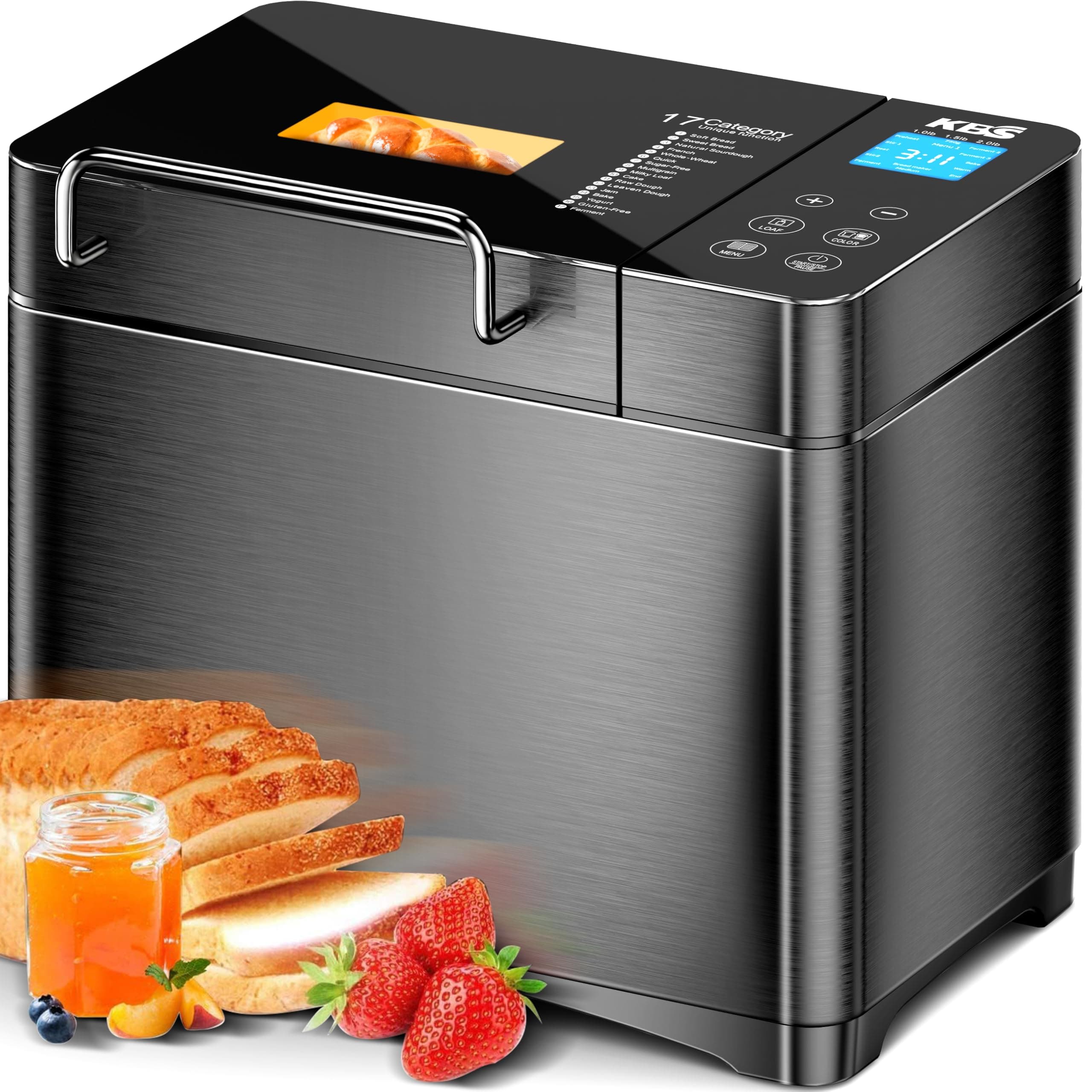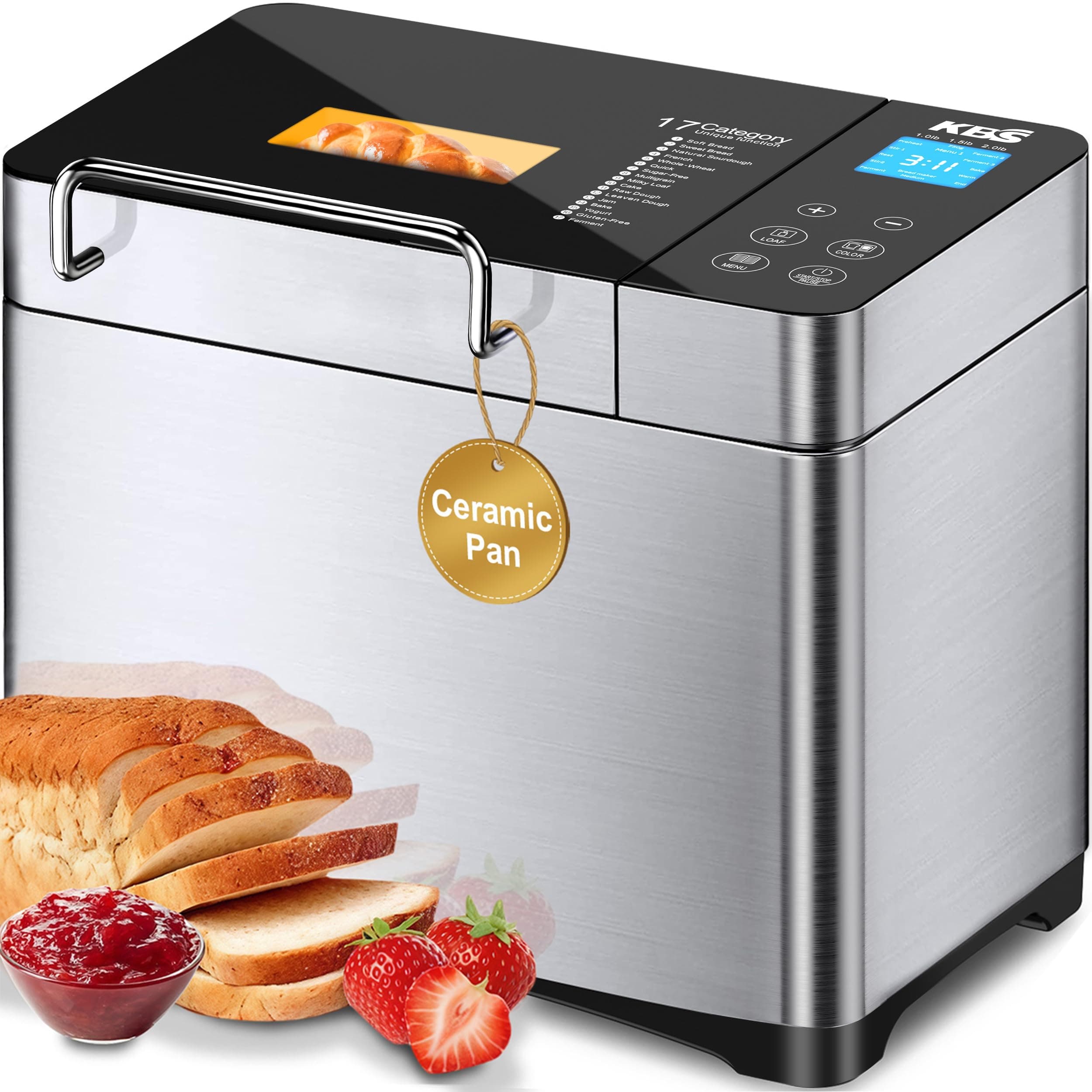
KBS Automatic Dispenser Programmable Stainless
Best for: beginners with dietary restrictions or those who plan to bake regularly and want customizable programming
Check price on Amazon— $129.99Pros
- 20 preset programs including a dedicated gluten-free cycle — covers dietary restrictions without manual recipe adjustments
- Dual heating elements provide even browning and consistent crust texture — 4.5-star rating across 2,156 reviews confirms reliability
- Programmable custom cycles allow users to save favorite settings — eliminates repetitive manual input after first loaf
Cons
- Instruction manual is 28 pages with dense technical language — beginners report needing 20-30 minutes to fully understand all features
- Automatic dispenser occasionally jams with sticky ingredients like honey or peanut butter — requires manual addition for certain recipes
- At $129.99, costs $30 more than OSIPOTO with only one additional preset program (gluten-free) as the main differentiator
Full review
The 4.5-star rating across 2,156 reviews isn't just a number. It reflects hundreds of first-time bakers who got a decent loaf on attempt one. Owners consistently highlight the dual heating elements as the reason their bread doesn't come out pale on one side and overdone on the other — a common frustration with single-element machines.
Programmable custom cycles are the sleeper feature here. Most beginners ignore them at first, then discover them around week three. Once you dial in your preferred white sandwich loaf, you save the cycle and never have to manually input those settings again. For anyone who plans to bake more than twice a month, that's genuinely useful.
A fair warning about the instruction manual: it's 28 dense pages, and beginners report spending 20-30 minutes working through it before feeling confident. Budget that time before your first bake day — don't try to skim it while the machine is already running. The automatic dispenser also has one known quirk: sticky ingredients like honey or peanut butter can jam it, so those go in by hand.
Pros:
- 20 preset programs including a dedicated gluten-free cycle — no manual recipe adjustments needed for dietary restrictions
- Dual heating elements produce even crust browning — the 4.5-star average across 2,156 reviews reflects that consistency
- Programmable custom cycles save your favorite settings — eliminates repetitive manual input after the first loaf
- 28-page manual with dense technical language — plan 20-30 minutes of reading before your first bake
- Automatic dispenser jams with sticky ingredients like honey or peanut butter — those need to go in manually
- At $129.99, costs $30 more than the OSIPOTO for one primary additional feature (the gluten-free cycle)
- Performance: 8.8
- Ease of Use: 8.3
- Build Quality: 8.6
- Cleaning: 8.2
- Value: 8.4
KBS Automatic Dispenser Programmable Stainless
beginners with dietary restrictions or those who plan to bake regularly and want customizable programming